
Access Control Power Supplies & Solutions
Power supplies are the heartbeat of any electrified door opening, converting high-voltage AC current into the stable, low-voltage DC power required by electronic locks and readers. This category provides the essential solutions for system reliability, ensuring that your locks remain energized during normal operation and fail-safe during emergencies. By utilizing professional-grade Securitron power supplies, you eliminate the risks of voltage drops and "dirty" power that can damage sensitive access control electronics.
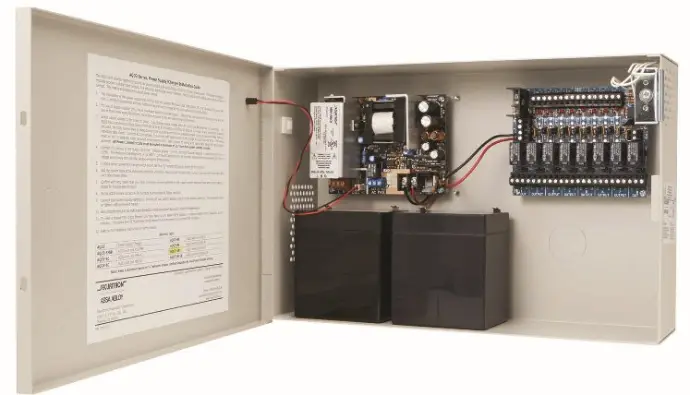
Cabinet Power Supplies
Cabinet power supplies are the standard for multi-door systems and professional security closets. These units feature a heavy-duty steel enclosure that houses the power board and provides ample space for backup batteries and field wiring. This is the definitive solution for powering large-scale deployments of electrified exit devices and maglocks, offering centralized control and integrated fire alarm tie-ins.
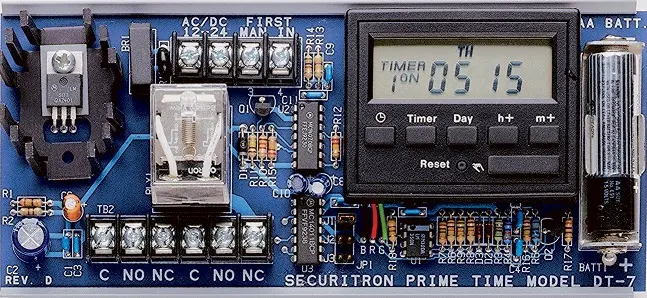
Relays & Components
The Relays & Components section includes the "intelligence" that sits between your power supply and your locks. This sub-category features logic boards, power controllers, and relay modules that solve complex operational challenges, such as sequencing double doors, managing interlocks (mantraps), or providing specialized circuit protection for high-draw hardware.
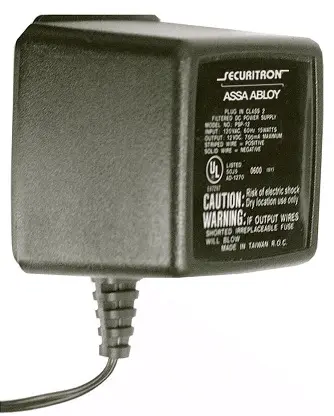
Plug-In Power Supplies
Plug-in power supplies (or transformers) offer a compact and cost-effective solution for single-door applications. These devices solve the problem of powering standalone hardware—like a single electric strike or a keypad—without the need for a large wall-mounted cabinet. They are the ideal choice for retrofits and light-commercial office spaces where a simple, reliable power source is required.
Calculating your Amperage
To determine the required amperage for a power supply, you must calculate the total electrical load of all connected devices. The process involves identifying the power draw of each component and applying a safety margin to ensure reliability.
1. Identify the Formula
The relationship between power, voltage, and current is governed by the basic electrical power formula:
P = V x I
To find the Amperage (I), rearrange the formula:
I = P/V
- I (Amps): The current or "flow" required.
- P (Watts): The total power consumed by your devices.
- V (Volts): The operating voltage of your system (e.g., 12V, 24V).
2. Calculate the Total Load
List every device that will be powered by the supply and find its wattage or amperage rating on its label or datasheet.
- If the device is rated in Watts: Divide the Watts by the system Voltage to get Amps.
- If the device is rated in Milliamps (mA): Convert to Amps by dividing by 1,000 (e.g., 500mA = 0.5A)
- Sum the Amps: Add the amperage requirements of all devices together to find your Total Connected Load.
3. Factor in a Safety Margin (The 80% Rule)
It is a standard engineering practice not to run a power supply at 100% capacity for long periods. Doing so generates excessive heat and reduces the lifespan of the unit.
- Recommendation: Multiply your total calculated amperage by 1.25 (or 130%).
- Example: If your devices require a total of 4A, you should look for a power supply rated for at least 5A (4 x 1.25 = 5).